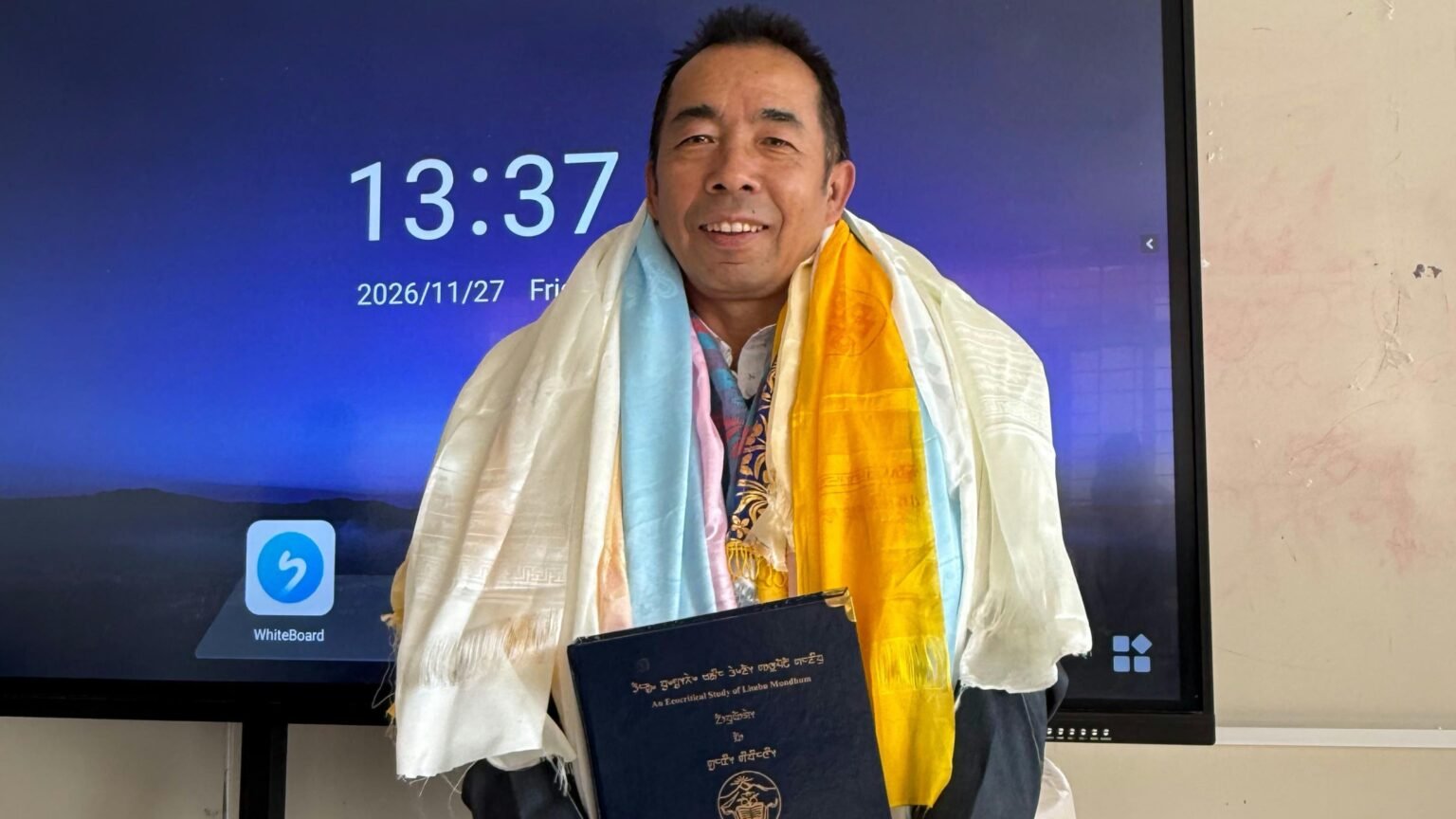
Yangang, 27 November 2026: The Department of Limbu, Sikkim University, marked a historic academic milestone with the successful completion of the Ph.D. viva-voce examination of Mr. Ash Bahadur Subba, the first doctoral scholar of the Department, on 27 November 2026 at 11:00 a.m. at the University’s Yangang Campus.
Mr. Subba defended his doctoral thesis titled “An Ecocritical Study of Limbu Mundhum (Yakthung Mundhumlen Lathik Tennam Sengwaba Sakni:m)”, submitted for the award of the degree of Doctor of Philosophy. Having commenced his Ph.D. programme in 2021, his achievement represents a significant chapter in the academic journey of the Department of Limbu and marks an important contribution to Indigenous language and cultural studies.
The research undertakes an ecocritical examination of Limbu Mundhum, the sacred oral narrative tradition of the Limbu (Yakthung) community. It explores the intricate relationship between Limbu cosmology, ritual practices, human–nature relationships, environmental ethics and the Indigenous ecological wisdom preserved through Mundhum narratives.
The study is particularly significant for bringing Limbu oral literature into contemporary ecocritical discourse while contributing to the documentation, interpretation, preservation and revitalisation of Indigenous knowledge systems and cultural heritage. It also reinforces the Department’s commitment to Mundhum research and the preservation of the Limbu language and oral traditions.
The thesis was undertaken under the supervision of Professor Kabita Lama, Department of Nepali, Sikkim University, with Dr. Dewchandra Subba, Assistant Professor, Department of Nepali, Sikkim University, and Mr. Bal Bahadur Subba, former Associate Professor, Department of Limbu, Sikkim University, serving as co-supervisors.
The viva-voce examination was conducted in an engaging and interactive academic atmosphere. Professor Yodida Bhutia, Department of Education, Sikkim University, actively participated in the academic discussion, along with research scholars from various disciplines. The deliberations brought interdisciplinary perspectives on Indigenous knowledge systems, ecocriticism, oral traditions, language preservation and cultural studies.
During the examination, the candidate addressed questions concerning the conceptual framework of ecocriticism, the methodological interpretation of Mundhum as oral literature, the ecological dimensions of Limbu beliefs and practices, and the relevance of Indigenous ecological wisdom to contemporary environmental and cultural concerns.
One of the most noteworthy aspects of this achievement is that Mr. Ash Bahadur Subba is the first Ph.D. scholar from the Department of Limbu, Sikkim University, to reach this milestone. The Department’s doctoral research programme was introduced in 2021, and his accomplishment marks the culmination of this pioneering academic journey. It is a moment of immense pride for the Department, the Limbu academic fraternity and the wider Yakthung community.
The successful completion of the viva-voce is not merely an individual academic achievement but also a landmark in the institutional recognition and advancement of Limbu language, literature, oral traditions and Indigenous knowledge systems. His research adds meaningful scholarship to the growing body of work on Indigenous ecological thought and cultural heritage.
The Department of Limbu, Sikkim University, expresses its heartfelt gratitude to the revered supervisor, co-supervisors, esteemed evaluators, external and internal members of the examination committee, participating faculty members, research scholars and students. The Department also extends its sincere appreciation to the Examination Department and the University administration for their invaluable support in making the viva-voce examination a successful academic event.
The achievement of Mr. Ash Bahadur Subba marks a historic beginning for doctoral research in the Department of Limbu and a proud moment for the preservation, promotion and academic advancement of Limbu heritage.
FIRST Ph.D. SCHOLAR OF THE DEPARTMENT OF LIMBU, SIKKIM UNIVERSITY, ACHIEVES HISTORIC MILESTONE

Leave a comment